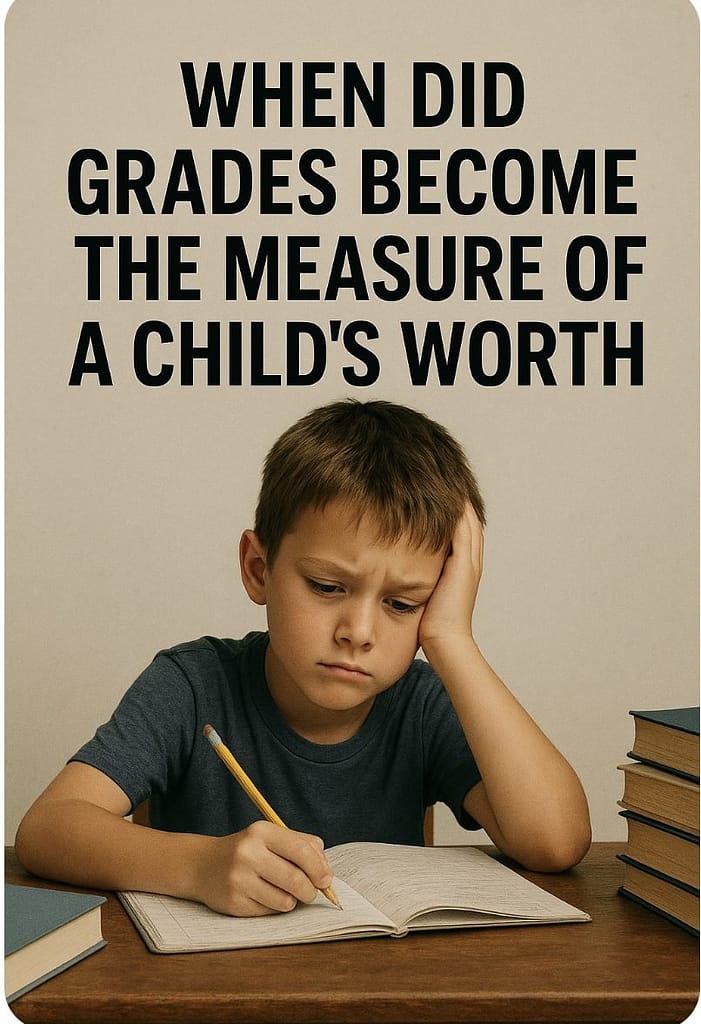
Somewhere along the way, we started measuring our children’s worth by the grades they bring home.
If they do well, we call them “good kids.”
If they don’t, we panic, label, lecture, or silently compare them to the ones who did better.
We say things like, “You just need to try harder.”
“What happened here?”
“I know you can do better.”
But underneath those words, what our kids often hear is: “You’re not good enough.”
And that breaks my heart.
Because grades were never meant to define who our children are.
They don’t measure kindness, effort, or creativity.
They don’t show the sleepless nights, the anxiety before a test, or the courage it takes to raise your hand even when you’re unsure.
A report card doesn’t tell you that your child stayed up late helping a friend.
It doesn’t capture the way they comforted someone who was sad, or how they light up when talking about what they love.
But we’ve built a system—and a mindset—that says, “If you perform well, you’re valuable. If you don’t, you need fixing.”
And we wonder why our kids feel anxious, afraid to fail, or terrified to disappoint us.
Yes, we all want what’s best for our children. But is it your dream or their dream?
We put so much pressure on them, when the truth is, only their Grade 11 and 12 marks are really going to count.
I’m at a stage in my life where I have no expectations for my daughter. Que sera, sera. Maybe that comes with age, or maybe it’s because I want her to find her own place in this world—somewhere she feels she belongs.
She’s at that age where every day she wants to be something new when she grows up. And even though I might secretly doubt some of those dreams, I always say, “Whatever you decide. Whatever you think you can be.”
Maybe it’s because I’ve reached the age where I just don’t care what others think anymore. I’m not competing to raise the next neurosurgeon. She will find her path—the one that makes her shine.
I speak to teenagers, and the pressure their parents put them under is honestly heartbreaking. I’m not saying we should let them play PlayStation all day and ignore school—that’s not it.
I’m saying don’t ask them to do maths when you know it’s not their strong subject. Let them choose what they can excel at.
Let them build confidence in what they love, and they’ll naturally want to do better. When we force them into boxes that don’t fit, we crush their spirit—and no mark or report card can fix that.
What annoys me is when the older people use it as a competition between kids.
“ so and so grand kid got great marks, you must sit more with your work”
It annoys me as kids are allowed to struggle, they are allowed not to like a subject and it’s ok.
I remember many moons ago a teacher said that my kid has a fear of public speaking and the speech prepared on my kids own didn’t come across so well.
And I responded that as adults I’m sure we have the same fear, public speaking .
If you want try to have a smaller group listen to the children.
And she tried it out and it worked.
The thing is that we measure grades, but spend less time focused on kindness, emotional wellbeing.
And that is just as important.
Absolutely! 💛 You said it so perfectly — not every child learns or shines in the same way, and that’s okay. It’s so true that we often turn kids’ progress into competition instead of understanding that each one has their own strengths, fears, and pace.
I love what you shared about the teacher trying a smaller group — that’s such a beautiful example of meeting children where they are instead of forcing them into one mold. Kindness, emotional wellbeing, and confidence are things no grade can measure. Thank you for sharing this — it really resonates. 🌿